When every drain in the house backs up at once, the main line is the problem. We clear it, verify flow, and camera the pipe so you know whether it's fixed or failing.
Every sink, tub, shower, toilet, and floor drain in your home eventually feeds one pipe: the main sewer line running from your foundation out to the city main. It's the largest drain on the property and the only one with no backup route. When it blocks, wastewater has nowhere to go but back up into the lowest opening in the house — a basement floor drain, a first-floor shower, or a toilet.
That's not a plumbing inconvenience, it's a health hazard and a property-damage clock. Main line calls get our fastest response, day or night, because every hour matters once sewage is entering living space.
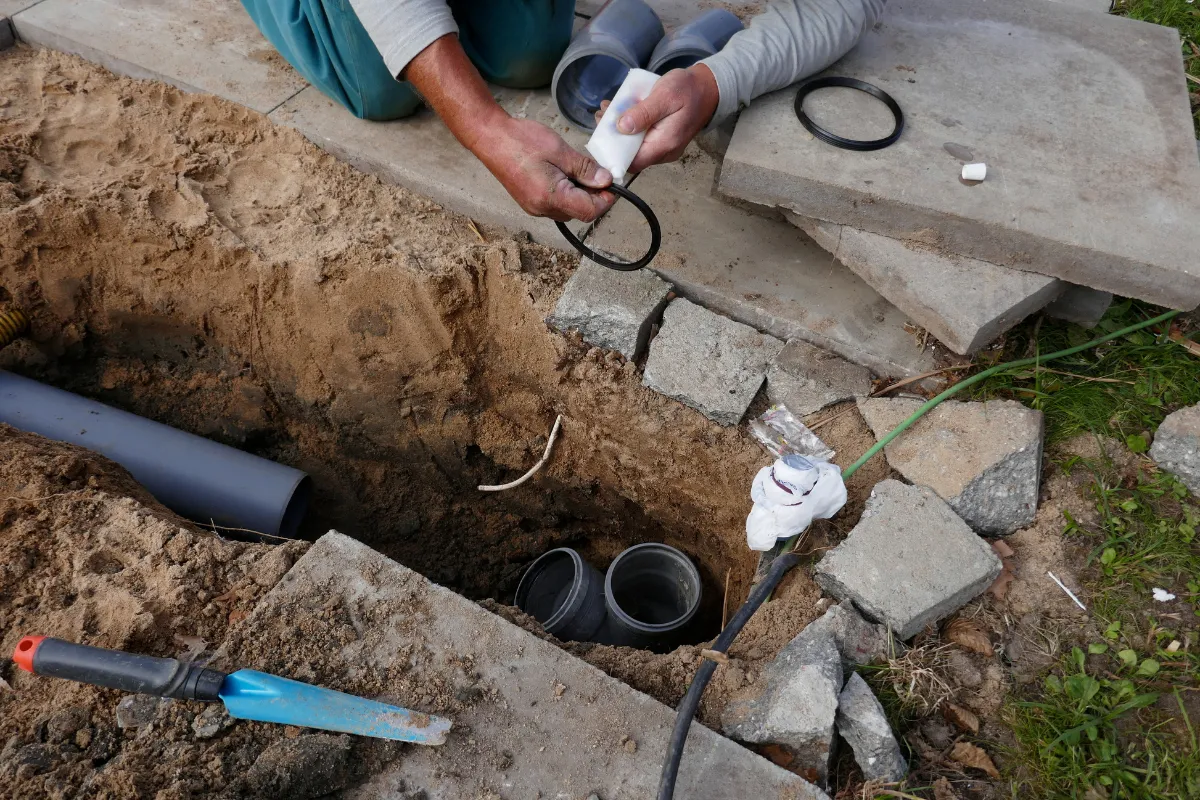
Branch clogs affect one fixture. Main line clogs affect the whole system. Look for:
This is the leading cause in our area, by a wide margin. Cottonwoods, elms, willows, and Siberian elms send roots toward the moisture and nutrients seeping from clay tile joints and cracked cast iron. Once inside, the roots fan out into a mesh that catches paper and solids until nothing gets through.
Many Colorado Springs homes were built with vitrified clay tile or cast iron. Clay is brittle and jointed every few feet — perfect entry points for roots. Cast iron corrodes from the inside out, roughening and narrowing over decades. Some 1950s–70s properties even have Orangeburg (tar-impregnated fiber pipe), which deforms into an oval and collapses.
Our expansive clay soils swell and shrink with moisture. Over time, sections of pipe settle, creating a belly where water and solids sit rather than flowing. Bellies cause chronic, repeat blockages that cleaning relieves but never permanently cures.
Grease from the kitchen coats the entire run. Wipes, paper towels, and hygiene products don't break down and snag on every root and offset joint on the way out.
We identify which fixtures are affected and locate your cleanout — usually outside near the foundation, sometimes in a basement or crawlspace. If the property has no accessible cleanout, we'll find a working access point and discuss adding one, because it makes every future service faster and cheaper.
We run a heavy-duty machine sized for 4-inch and 6-inch line with the cutting head matched to what we're up against — a root cutter for intrusion, an auger head for solid obstructions. The goal is to restore full flow, not just relieve pressure.
We push high volume through the line and confirm it carries away cleanly. A line that merely trickles isn't finished.
Then we run a sewer camera the full length and you watch with us. This is the step that answers the question that actually matters: is this a pipe that will keep working, or a pipe that's failing? You'll see the condition of the joints, whether roots have compromised the wall, and whether there's a belly holding water.
Depending on what we find, that might be nothing further, an annual maintenance cleaning, a hydro jetting pass to strip the walls back to bare pipe, or excavation and replacement of a failed section. You get the real options with real prices — and we're straight with you about which ones are urgent.
If the pipe is structurally sound and the problem is material inside it — roots, grease, scale, debris — cleaning is the answer, and it will hold. If the pipe itself has failed — collapsed, badly offset, deeply bellied, or corroded through — no amount of cleaning changes the outcome, and repeat service calls are just rent on the problem. The camera makes that call obvious, which is exactly why we always run one.
We clear main sewer lines in Colorado Springs, Monument, Larkspur, Castle Rock, Castle Pines, Peyton, and Woodland Park — nights, weekends, and holidays included. Free estimates, upfront pricing, and camera-verified results on every job.
Call (719) 639-4137 now and we'll get your main line flowing again.
Straight answers from the crew that does the work.
If a single fixture is slow, it's usually a branch line. If two or more fixtures back up at the same time — especially the lowest ones in the house, like a basement floor drain or first-floor toilet — it's the main line. Gurgling in a toilet when the washer drains is another classic main-line signal.
In Colorado Springs, the property owner is generally responsible for the lateral from the house to the connection at the city main, including the portion under the street or sidewalk in many cases. That's why maintaining and inspecting it matters.
It depends on access and severity, but main line cleaning typically runs higher than a simple branch drain because of the equipment and time involved. We quote a firm price up front after we see the access point, and estimates are free.
Rarely. The vast majority of main line calls are resolved through a cleanout with cabling or jetting. We only recommend excavation when the camera shows the pipe itself has failed, and then we locate the defect precisely so the dig is as small as possible.
Homes with mature trees over the line benefit from an annual cleaning to keep root growth in check. Newer PVC lines with no trees nearby may go many years without needing service. A camera inspection tells you which category you're in.
Drains, sewers, and excavation — that's all we do.

Clogs, roots, grease, scale — cleared fast, with flow confirmed before we leave.
Learn More →
High-pressure water scours pipe walls clean — and stops repeat clogs for good.
Learn More →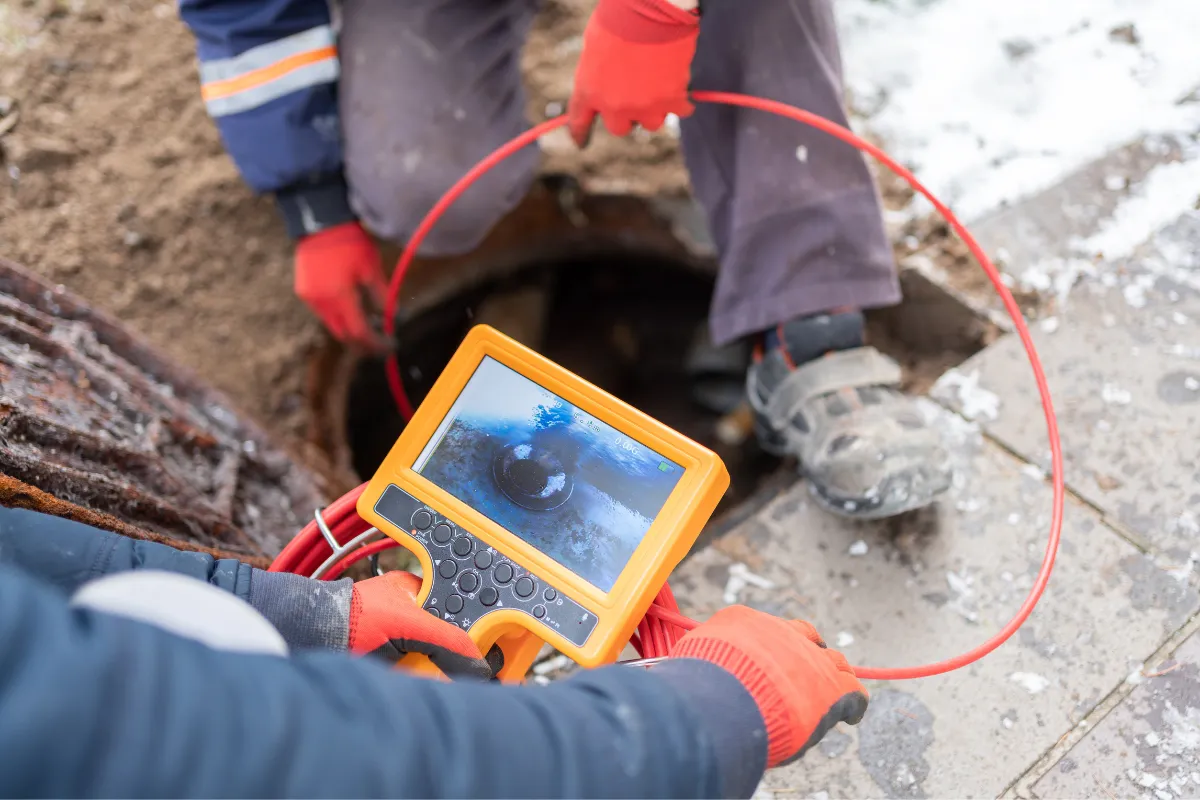
See inside your line in real time. No guesswork, no unnecessary digging.
Learn More →
Backups don't keep business hours. Call any time — we answer, and we come.
Learn More →Free estimates. Honest answers. Same-day service in most cases. We clear the problem — fast.
Request ServiceCall (719) 639-4137